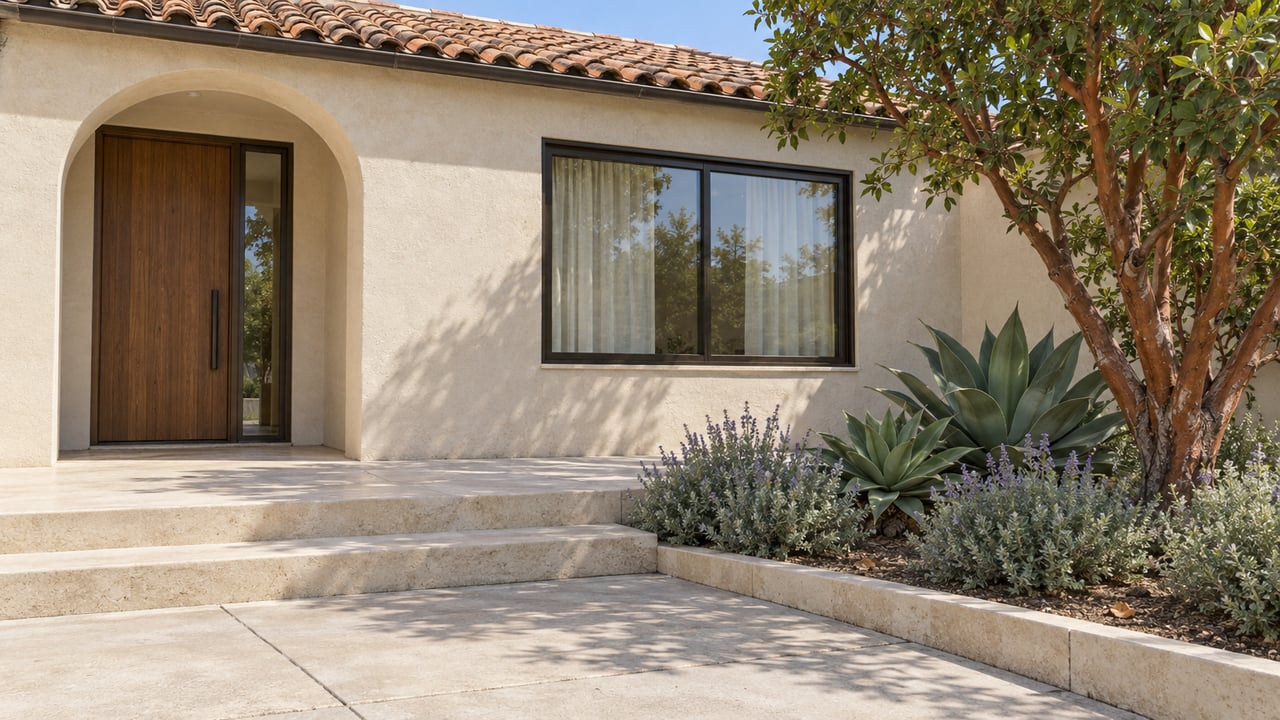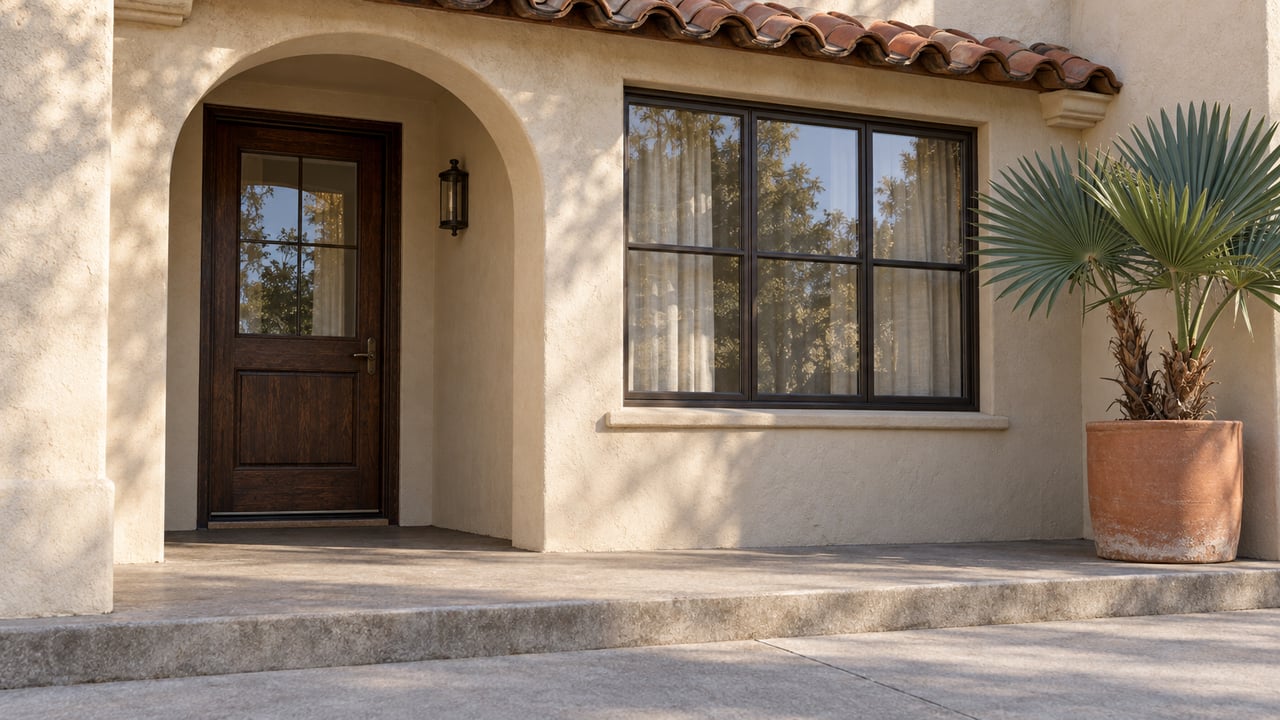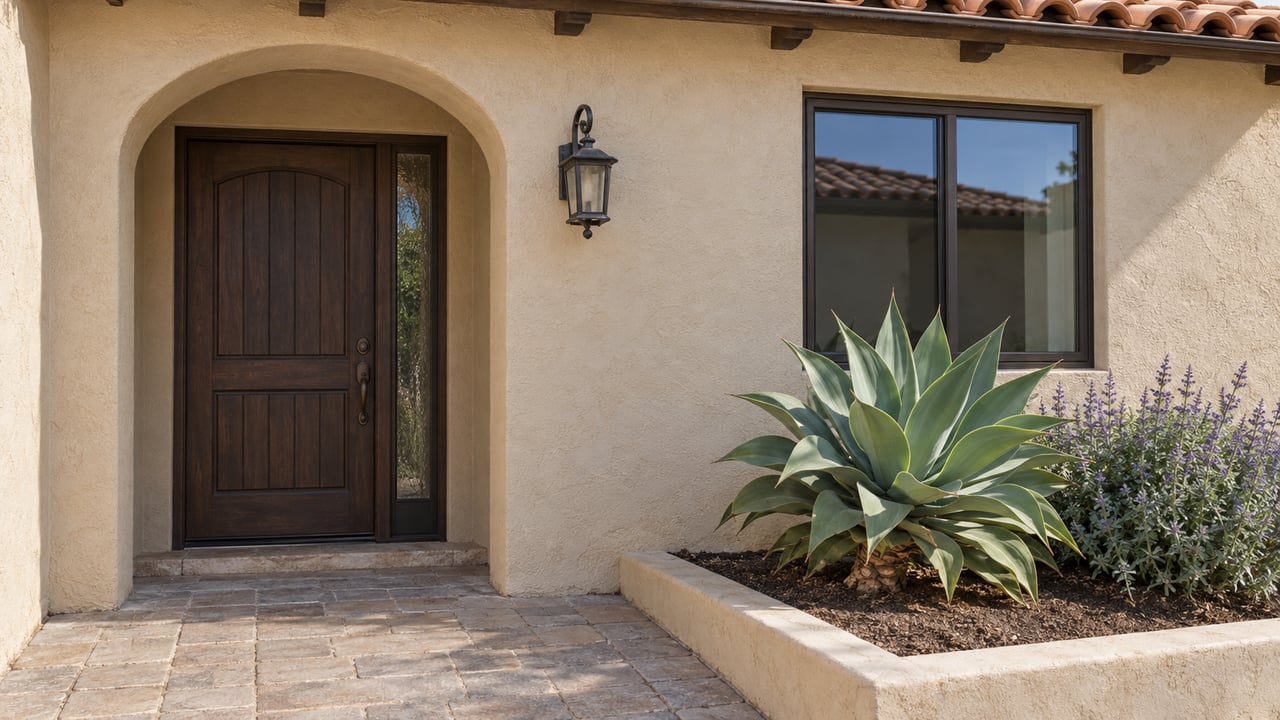
A buyer walks a Covenant estate, loves the bones, and starts sketching the addition in their head before the second showing ends. A guest suite over the garage. Maybe a fourth bedroom for when the in-laws visit. None of that shows up in the purchase agreement, and none of it shows up in an automated valuation either. It shows up later, during the inspection period, when someone finally asks the question that actually governs what gets built in Rancho Santa Fe: what does the septic system allow, and who has to sign off before a shovel touches the ground.
For a Covenant property, those two questions—not the sale price or lot size—can shape what it can become after closing. Both got more consequential this year.
Septic Decides Before the Architect Does
Most of the Covenant runs on private wastewater rather than a municipal sewer main. That single fact reframes how a buyer should think about square footage. Adding a bedroom is not primarily a design decision. It is a capacity question for a leach field that was often sized decades before the addition anyone is now imagining.
San Diego County's own septic design criteria spell out the mechanics: leach lines have to sit a minimum distance from structures, typically eight feet, and from the tank itself, typically five feet, and those setbacks apply to anything the county classifies as a structure, which can include a pool, a pool house, or a deck as easily as a home. A San Diego County contractor who lists Rancho Santa Fe among the communities he builds in documented exactly this process on a recent rebuild, marking out leach line locations before a health department inspector would sign off on the permit.
That constraint gets sharper the moment an ADU enters the plan. Local ADU-regulation guidance for Rancho Santa Fe puts initial plan review at 30 to 45 days for a straightforward project, with each resubmission adding another 10 to 20 days. A project that touches grading or septic capacity, which describes a meaningful share of ADU proposals in the Covenant, commonly runs two to three months before approval. None of that clock starts until someone has confirmed what the existing system can actually absorb.
An automated home value estimate has no way to know any of this. A septic system's remaining capacity is a site-specific fact, verified with a functional inspection and a located leach field, not a number that shows up in public records. For anyone planning to expand after closing, that is the diligence item that decides the project timeline more than the architect's schedule does.
The Association Changed Its Design-Review Process
Septic capacity tells you what you can build. The Rancho Santa Fe Association's Art Jury tells you what you're allowed to build, and inside the Covenant its approval is required before exterior work begins, whether that is a new structure, a significant remodel, or in many cases a landscape change. The Art Jury has held that authority since the 1920s Protective Covenant, and California courts have upheld its teeth. In the appellate case Dolan-King v. Rancho Santa Fe Association, a homeowner sued after the Art Jury rejected her proposed room additions and perimeter fence, and while a trial court initially sided with her, the appeals court found the Covenant's design-review provisions were enforceable equitable servitudes, meaning the Association's aesthetic authority stands even when a homeowner disagrees with the outcome.
That authority is not theoretical in 2026. This spring, the Art Jury unanimously cleared the design for Silvergate, a proposed 148-unit senior living campus, after the developer made roughly 25 changes to the plan and shrank the site from about 29 acres to roughly 23. The Art Jury's approval was only one step. County entitlements and a separate Association review still stand between the project and construction, and a resident group called Protect the Covenant has continued pushing for a full membership vote before anything advances. Whatever side of that specific fight a buyer cares about, the episode is proof that Art Jury review is an active, contested process this year, not a formality that rubber-stamps whatever a homeowner submits.
Here is the part that changes the calculus for anyone buying with renovation plans. On January 8, 2026, the Association's board approved two resolutions that restructured how design review works inside the Covenant. The first created a separate review track for Association-sponsored projects, meaning common-area work like the golf club, distinct from the process every homeowner still has to follow under the Protective Covenant. The second shifted additional Art Jury authority over to Building Department staff. The Association-sponsored track is capped at three reviews, preferably two; homeowner projects remain subject to the full Art Jury and appeal process, which has no comparable cap. Three weeks later, the board approved an $8 million clubhouse restaurant renovation under that track.
For a buyer planning a renovation, the practical takeaway is to allow time for the homeowner review and appeal steps when planning.
What the Covenant Address Doesn't Tell You
Not every property with a Rancho Santa Fe mailing address answers to the Art Jury at all. Several distinct communities share the address and are governed very differently.
| Community | Governing body for design review | Typical wastewater |
|---|---|---|
| The Covenant | Rancho Santa Fe Association, Art Jury | Largely septic |
| Fairbanks Ranch | Its own gated HOA | Mixed, parcel-specific |
| The Bridges | Private golf club HOA with its own membership structure | Mixed, parcel-specific |
| Cielo | Its own homeowners association | Mixed, parcel-specific |
Establishing which governance applies to a specific parcel is a first-week question during escrow, not a detail to sort out later. A buyer who assumes Covenant rules apply everywhere in the 92067 or 92091 zip codes can misjudge both the approval timeline and the review criteria.
What to Actually Ask For During the Inspection Period
A buyer with renovation intent should treat the inspection period as the moment to establish both gatekeepers, not just the physical condition of the house.
- Request a functional septic inspection that locates the leach field and states its rated capacity, not just a pump-and-look report.
- Confirm in writing whether the parcel sits inside the Covenant, and if so, request the recorded CC&Rs and the Association's current design manual and fee schedule.
- Ask the seller for any past Art Jury approvals, as-built plans, or open violation notices tied to prior work on the property.
- If sewer is available on the street, ask what a lateral connection and septic decommissioning would cost, since some owners find it changes the calculus on remaining leach field capacity.
- If an ADU or major addition is part of the plan, build the county's typical 30-to-45-day initial review window, plus the possibility of a two-to-three-month septic-involved timeline, into the purchase timeline rather than the renovation timeline.
None of these steps show up on a standard home inspection checklist. They are the difference between a buyer who closes and starts drawing plans immediately and one who spends the first year of ownership discovering what the parcel will and won't allow.
A Short FAQ
Does every Rancho Santa Fe home run on septic? No. Some streets have access to the sewer main maintained by the Rancho Santa Fe Community Services District, and connecting removes the leach field constraint entirely, but coverage is street by street rather than community wide.
Does the Art Jury review apply if I'm not in the Covenant? No. Fairbanks Ranch, The Bridges, and Cielo each have their own association and review process, separate from the Rancho Santa Fe Association's Art Jury.
How long does Art Jury review actually take? The Art Jury meets roughly every three weeks. Straightforward projects can clear in one or two cycles. Complex projects, additions, or anything touching septic or grading routinely take multiple revision rounds and can stretch to several months.
Can I build an ADU on a septic-served lot? Yes, but the septic system often needs to be evaluated, and sometimes upgraded, to handle the added wastewater demand from a new bathroom, which is one reason septic-involved ADU projects take longer than straightforward ones.
If you are weighing a Rancho Santa Fe property with renovation in mind, or trying to figure out which governance applies to a specific address before you write an offer, Connie Sundstrom can walk the parcel-level details with you before you're locked into a timeline you didn't plan for. Work With Connie.
This article is general information, not legal, tax or financial advice. Consult a qualified professional about your situation.